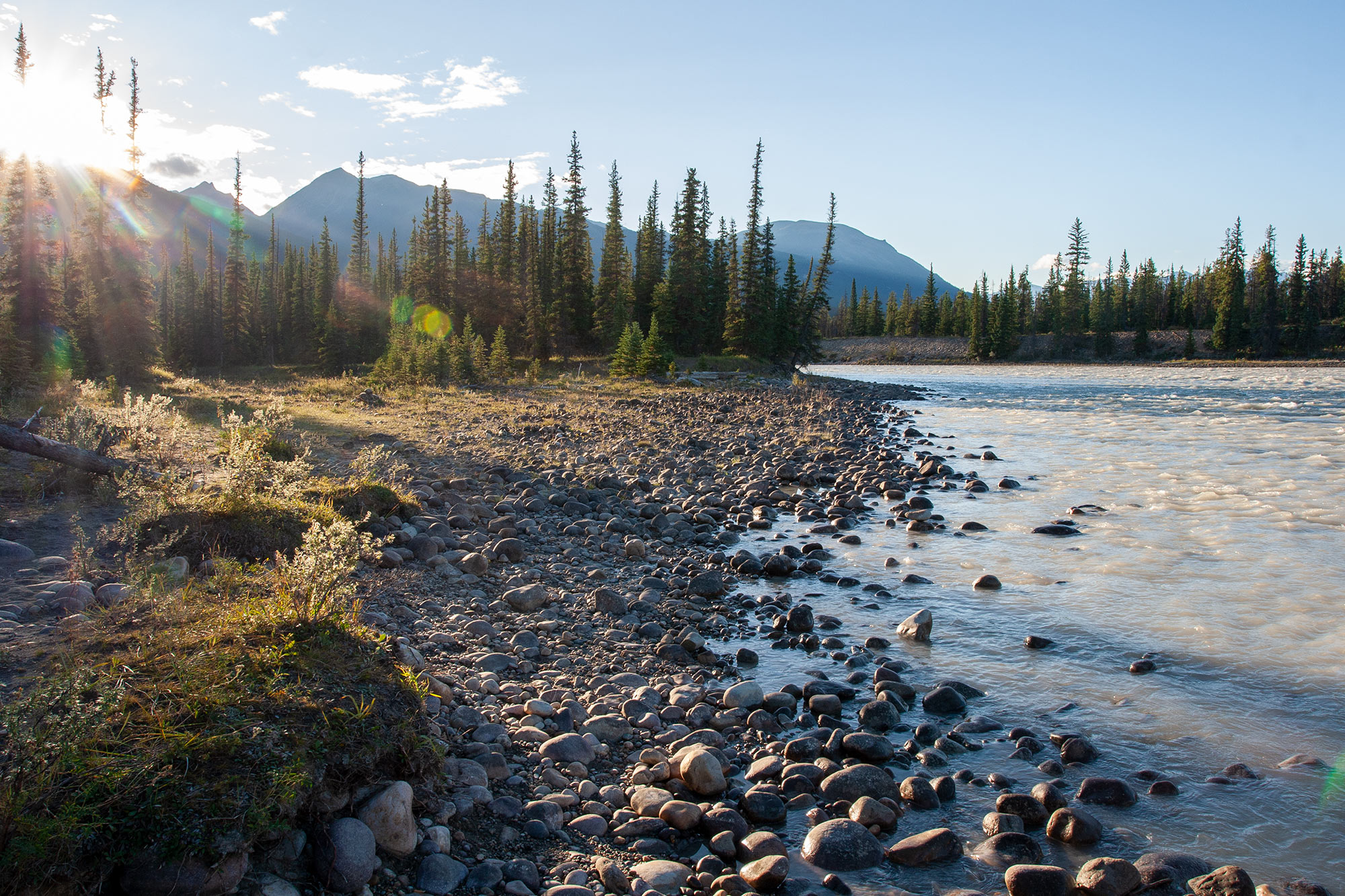
When: September 2017
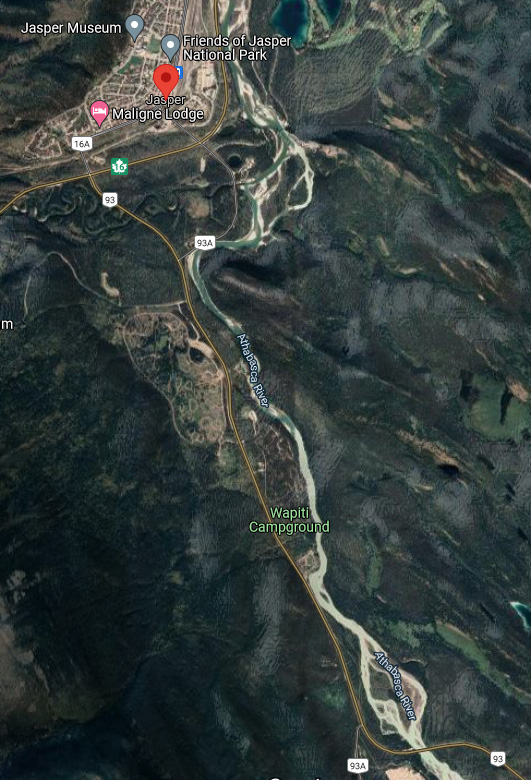
Where: Wapiti Campground at Jasper National Park in Western Alberta
Road Trip: Canadian Rockies (Banff and Jasper)
What: night photography
Accompaniment: Wonderful Wonderful by the Killers
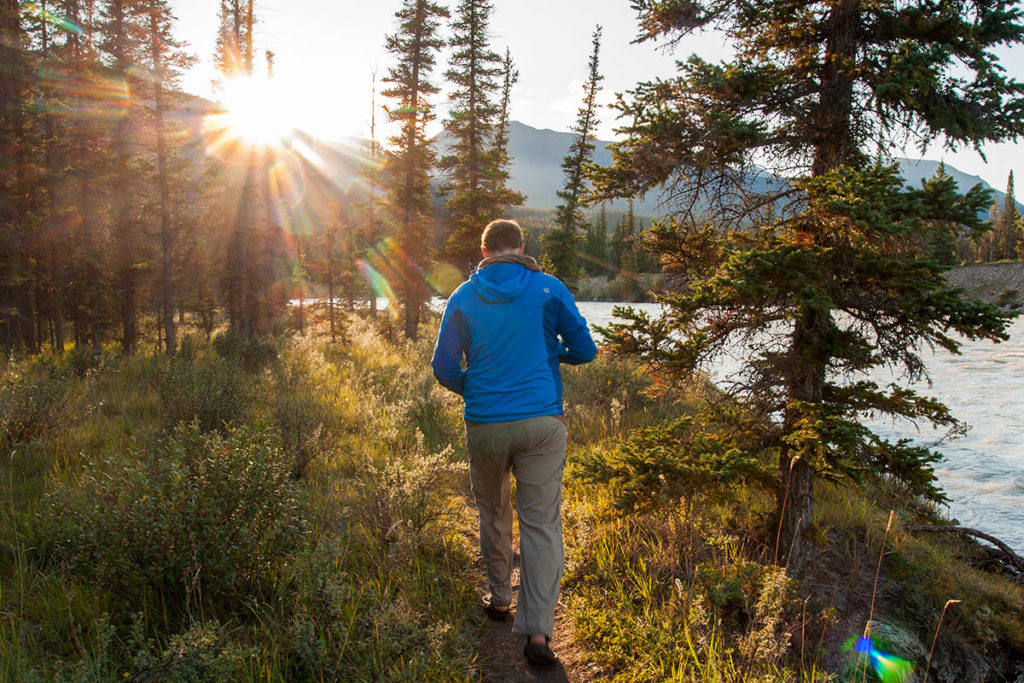
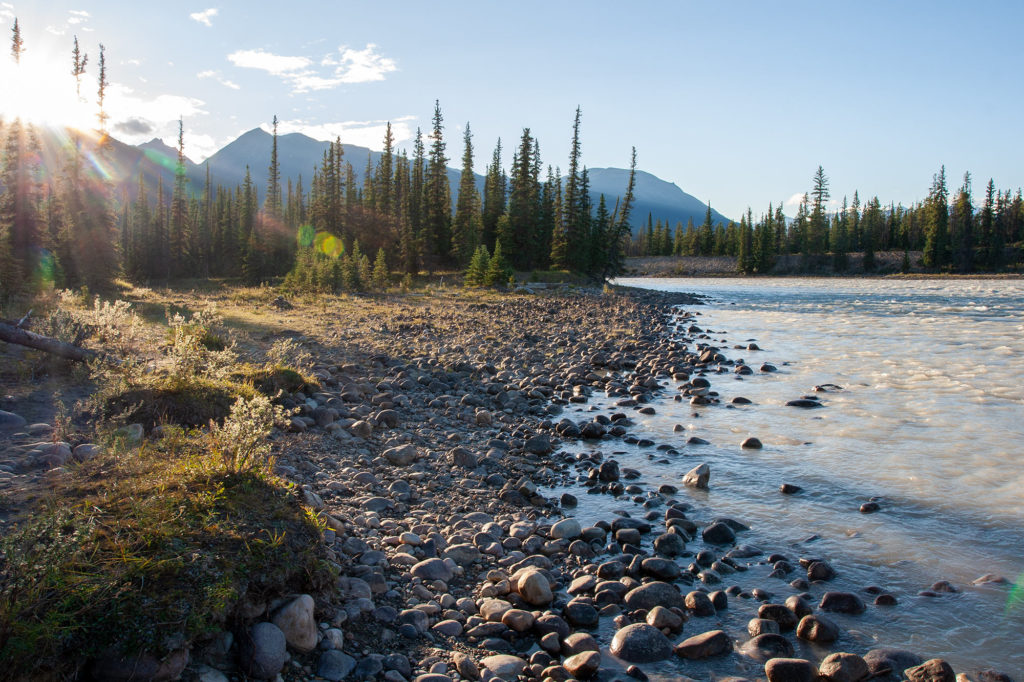
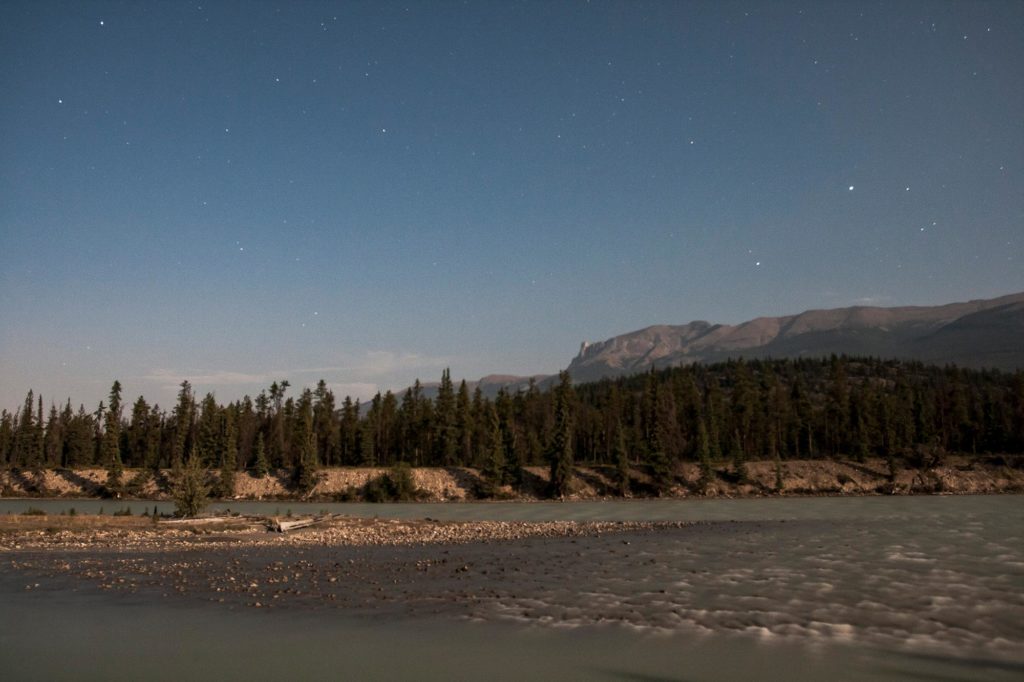
I was determined to try some night photography on our Canadian Rockies roadtrip. After smoke blocked the night sky in Banff, I was thrilled to get a view of the stars in Jasper. It’s a Dark Sky Preserve, so they work to limit light pollution.
I knew next to nothing about night photography. But sometimes, it’s fun to do things for the sake of doing them.
The campground sits next to the Athabasca River, its milky waters flowing to the Arctic Ocean. A path meanders along the shore, leading down to a rocky bed spotted with grasses and stunted trees.
I decided I’d photograph from the river bank, curious whether the water’s color would be apparent in nighttime photos. My partner and I scoped it out with a sunset walk and photoshoot, stumbling over the cobblestones and admiring the stunted conifers. As the sun set behind tall mountains, it cast rays of light over the river.
My partner’s more outgoing than I am, and sometime when I wasn’t looking he befriended the campers next door, a couple about our age on an ambitious road trip from Minnesota. He invited them to come hang out over local beers at our camp after dinner. As it faded to dark, I mentioned my goal to take some night photos. “Can I come too?” the woman asked eagerly. So we strapped on our headlamps, grabbed our cameras, and headed over to the riverbank.
Even though my photos are out of focus, and shockingly bright thanks to the moon I didn’t consider – it seemed pretty dark to me – I’m glad I just went and did it.
Canadian Rockies Roadtrip
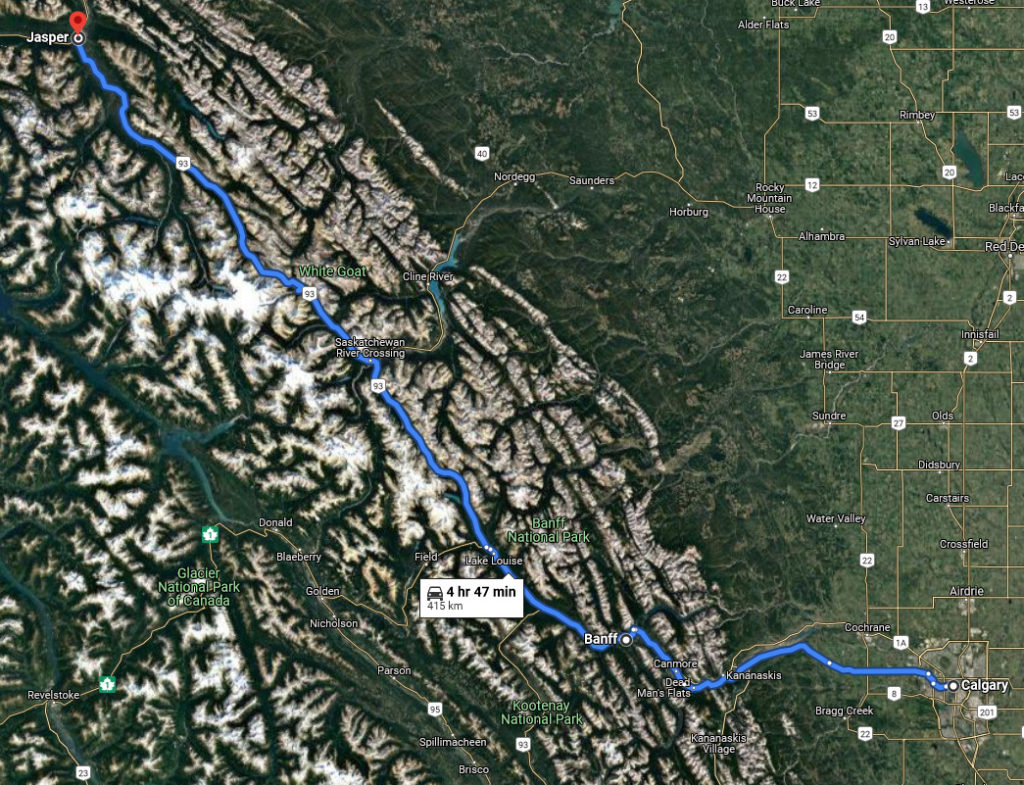
We started the trip in Banff, where it was so smoky we couldn’t see the mountains the day we arrived. After a few days camping there, we drove up through the jaw-dropping mountains towards Jasper. We passed where the Great Divide splits from the Arctic Divide, so water on the West drains to the Pacific Ocean, on the North drains to the Arctic Ocean, and the rest drains to Hudson Bay. Our campsite was just outside of the town of Jasper.
In Jasper, we visited Athabasca Falls (cool), the glacier at Mount Edith Cavell (you have to get a day-pass for an assigned time, which means showing up at the ranger station in Jasper at like 7am – afternoon had terrible light for photos), Jasper Lake (we saw bighorn sheep! and waded out deep in the water which is shallow for a long way), Maligne Canyon (very cool), Pyramid Lake (we saw kayakers, seemed like a great spot for it, a small little island trail but a pretty drive) and Maligne Lake (you can rent a boat there but it was gross and rainy so we passed).

Hey Tracy nice one. Those mtns going to Jasper are fantastic. Maureen’s cousin Garny just retired there.
That drive up through the mountains is jaw-dropping!
RE night photography: Gotta keep trying new things to keep the mind open and alive.
When: September 2017Where: Hoodoos Trail in DrumhellerRoad Trip: Across Alberta (from Banff to Drumheller)What: exploringAccompaniment: Ugo by the Dead Pirates
We returned from Jasper to Banff to find a single available campsite right beside an active traintrack, and the air still foul with smoke.
Tired and desperate, we stayed one train-whistle-filled night, and awakened Ready for Plan B. I’d done so much research deciding where to go on our trip that I had a great backup option for us. We headed east, passing back through Calgary, then through what felt like endless fields. The drive was so dull it felt twice as long as it was.
At last, we dropped over the crest of a valley and down to Drumheller. The picturesque badlands around the town are striped in shades of brown and tan and orange like a turkey tail mushroom. Nearby, the Hoodoos Trail guides visitors through ancient rock formations created when a softer layer of stone erodes beneath a harder layer, leaving “towers” capped by wider flat tops. The main collection of hoodoos is well protected, a raised trail and fencing separating people from the fragile rocks, but the rest of the site is a free-for-all.
We wandered up and around ridges of striped stone, admiring the endless textures of the different layers and the beautiful fractally-grooved patterns made by years of water wearing it away. Pebbles worn or knocked loose from the layers accumulated in the hollows. Previous visitors had built rockpiles atop ledges of sandstone. The sky was still blanched with smoke, but we couldn’t smell it anymore — a relief after a week of camping in it.
Focus on Drumheller
Drumheller is a petite town with a cute central core populated by dinosaur sculptures of every style imaginable. A dinosaur bust bursts from the storefront of the town grocery store. A horse-sized brontosaurus painted as a skeleton stood in our hotel’s parking lot beneath the road sign. Unsatisfied with a twenty-odd-foot-tall T-rex, someone built the world’s tallest dinosaur (86 feet tall) in sight behind it, and you can pay to go up to its mouth. (I don’t actually know which came first 🤔)
Everything about Drumheller’s history comes down to its unique geology. When the last coal mines shut down in the 70s, the town pivoted to tourism. Alberta’s rich seams of coal and oilfields also give up skeletons hidden for millenia. Drumheller, Dinosaur Capital of the World, is home to the world-class Royal Tyrrell museum, one of the finest museums I’ve had the pleasure to visit. They hired Kurzgesagt to create videos and displays. They commissioned artists to create striking glass and wire art illuminating their dinosaur fossils, evoking their ghosts and giving life to the bones so you can better imagine the animals they were. Their stunning Black Beauty T-rex is presented with striking effect, a massive wall of stone with protruding black bones catching the light, the creature’s open jaws roaring its resistance to death. Their extensive collection of fossils is displayed in dynamic scenes — a saber tooth leaping onto a mammoth realizing its fate too late — a pair of tiny fierce dinosaurs slinking along together. Honestly, the trip to Drumheller is worth it for the museum alone.
Our two other stops were the scenic overlook at Horseshoe Canyon and Atlas Coal Mine, where dedicated locals have maintained a small coal train you can ride (extremely loud) and offer tours of the mine and processing plant (though we didn’t take one). We only had a couple days in Drumheller, but could easily have spent at least one more. Word of caution if you’re used to West Coast IPAs — don’t expect anything like Cascade Hops — we thought we’d been served a lager 🍺😂